


Sprinkler Leak Detection: Small Leaks That Cost Big Money

Most irrigation leaks don't announce themselves. By the time a wet patch is obvious enough to notice while walking past, the leak has usually been running — and wasting money — for weeks.

The Leak You Can't See Yet
EPA WaterSense puts a number on just how much a "small" leak actually costs: a leak only 1/32nd of an inch in diameter — smaller than the width of a dime — wastes about 6,300 gallons of water a month. That's before it's big enough to leave a visible wet spot anywhere in the yard. Nationally, EPA estimates household leaks waste more than 1 trillion gallons a year, and 9% of homes have a leak bad enough to waste 50 gallons or more every single day.

Reading the Signs Before the Water Bill Does
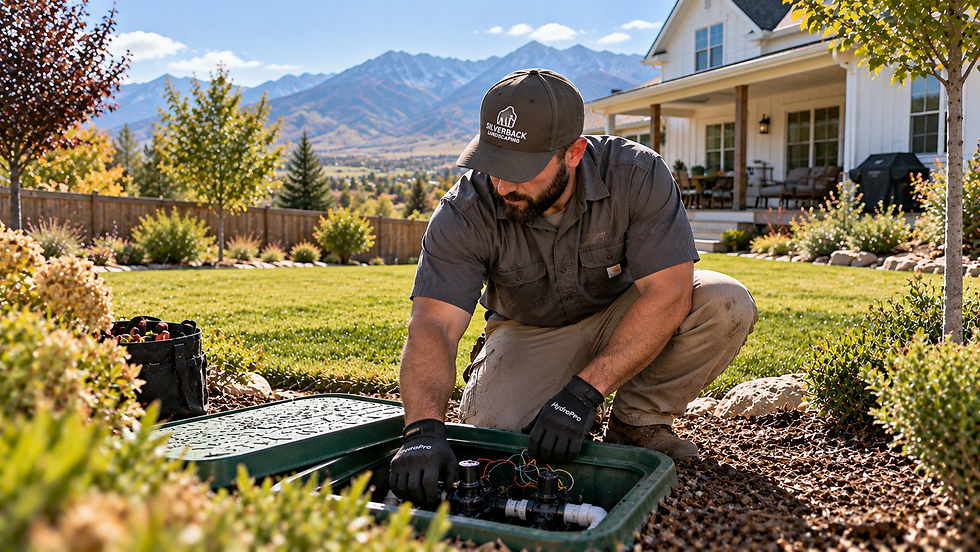
Colorado State University Extension points to a few specific signs worth walking the yard for after a normal watering cycle. Water that constantly seeps from a sprinkler head — not just briefly after the system runs, but ongoing — usually points to a worn diaphragm or failed valve inside the control box. Wet spots that show up outside a zone's normal drainage pattern are another flag, especially if the same spot stays damp well after everything else has dried. Broken or missing sprinkler heads are a simpler but easy-to-miss cause — they let water run off instead of reaching the lawn, and CSU Extension recommends replacing them immediately rather than letting them run.
The Two-Hour Water Meter Test
If the water bill has been creeping up without an obvious reason, EPA's test doesn't require any special equipment: check the water meter reading, wait two hours without using any water in the house or yard, then check it again. If the reading moved at all, something is leaking somewhere on the property — the irrigation system included. Fixing easily-corrected leaks like these can save around 10% on a typical water bill, according to EPA.
A Few Things Worth Checking on a Regular Basis
Walk the system after a run cycle. Look for water that keeps seeping from a head long after the cycle ends, or a spot that's still wet well outside where a zone normally drains.
Run the two-hour meter test if the water bill jumps without an obvious explanation like a new lawn area or a hot, dry stretch.
Replace broken or missing heads immediately. A head that's cracked or gone lets water run off instead of watering anything.
Check valve boxes for worn parts. A diaphragm that's worn out, or a sealed valve unit that's failed, is a common cause of constant seepage at a head.
Watch system pressure. Too much pressure causes fine misting that drifts away instead of soaking in; too little causes large droplets that miss their target — both waste water without doing their job.
FAQs
How much water can a "small" leak actually waste?
More than most homeowners expect. EPA's figure is about 6,300 gallons a month from a leak only 1/32nd of an inch across — well before it's large enough to leave an obvious wet spot.
How do I know if a leak is in my irrigation system or somewhere else in the house?
The two-hour meter test catches any leak on the property, not just the sprinkler system. To narrow it down, turn off the irrigation system's shutoff valve and run the test again — if the meter stops moving, the leak's in the irrigation system rather than the home's indoor plumbing.
Is a damp spot near a sprinkler head always a sign of a leak?
Not necessarily — some dampness right after a watering cycle is normal drainage. The real flag is water that keeps seeping from a head on an ongoing basis, or a spot that stays wet well outside its normal drainage pattern, per CSU Extension's guidance.
Is this something worth handling myself, or bringing in a professional?
Replacing a worn valve diaphragm or tracking down exactly where an underground line is leaking isn't always straightforward, especially without disturbing the rest of the system. Get a free quote → and we'll find it and fix it before it shows up as a bigger repair — or a bigger bill.



Comments